The Twilight Experiment: Day 1

I slide the book over the counter, cover down, and look at the cashier. A middle-aged woman – very short red hair, glasses, and the distinct air of a book-snob about her – looks back at me. My ruse hasn’t worked. She knows immediately what I’m buying. My mind is racing, imagining that the only thing that’s keeping her from saying something is the fact that the copy of Twilight that I’m about to buy is in English while she is German. I want to blurt out that I’m buying this thing, this literary abomination, for the sake of an experiment. For the sake of science, so to speak. Really quite self-sacrificial of me. But in the end I don’t say anything, not even hello/thank you/goodbye. Better to let her think I don’t speak German.

Outside of the bookstore I don’t have much time to look at the slim paperback that I just bought. I need to meet someone and I’m in a hurry. Also I’m not that keen on actually starting this little experiment of mine. Someone could get hurt.

My brain, for example.

Rewind… I’d seen Twilight: New Moon a while ago and thought that it had possibly set a new record for storyline-atrocity. But only just possibly, there’s always Bloom. Looked good though, can’t deny that. And then there was the thing with the other readers, sane people one and all, people whose judgement I trust, people who seem to have taste (you know who you are). And they had read Twilight. And New Moon. And the rest. Not only had they survived the experience, they had also said things like “reads well” or “it’s sort of fun, in a guilty pleasure kind of way”. And that planted the seed of doubt. Twilight, scourge of high fantasy, read by millions upon millions of teenagers. Was it really that bad? Did I have a right to participate in the ongoing Twilight discussion trashing without having read a single word of it? Does Bella Swan have a single redeeming feature? I don’t believe in guilty pleasure, at least not very much. If someone says something is a guilty pleasure he or she usually means that it is good, but doesn’t want to admit to thinking that in the company of others. Here in Germany Harry Potter is a guilty pleasure, see?

We have a saying in Germany which roughly translates as “eat shit, millions of flies can’t be wrong”. It doesn’t translate very well, but still serves to illustrate what is at the core of this little experiment: What if millions of flies aren’t wrong?

Back to Day 1: I meet the person I was going to meet and get a very disapproving frown when I mention what I have just done. Twilight, well actually fantasy literature as a whole, has a bad standing in Germany. Escapism, nonsense, childishness, these words are spoken much quicker and with less kindness here in the country of sheep. Intellectual people read suspense novels, because when the gardener kills Lord Adolfstein by shoving him into the paper shredder that’s, like, real, you know.

I’ve heard all of it before and gotten inured to the attacks of the literary elite by now. Still I try to explain. “It’s because I finally want to have an informed opinion. I don’t want to be talking out of my arse all the time.” Only three days later I will be ready to launch into a well-rehearsed speech on the subject of why reading Twilight was such a spiffing idea.

In the train on the way home, I open the book for the first time. I keep it on my lap, bending over in order to still be able to read. The cover of the German edition is identical to the English one; if I hold the book up like I normally would, people might notice what I’m reading.

I only skim the acknowledgements. Usually not my style, I tend to assume that authors have put some thought into whom they thank, but Stephenie Meyers’ acknowledgements are longer than some books I’ve read. It takes Jonas to point out that she thanks her “online family” at fansofrealitytv.com. That explains so much.

“I stared without breathing across the long room, into the dark eyes of the hunter, and he looked pleasantly back at me.”

It’s not the first sentence of the book, that honour goes to something bland and incredibly convoluted, but if it were it would easily win the Bulwer-Lytton Fiction Contest, probably for several years in a row. It’s just that kind of sentence. I can’t even begin to describe what is wrong with it, there’s just too much, although the part about “pleasantly looking back” certainly makes up a good deal of the overall horribleness.

Two paragraphs down, 434 pages to go. Suddenly I’m not sure if I can do this. Yet I turn the page and read on. Once I’m in the flow it isn’t too bad. The atrocities keep coming, but they somehow get drowned out by all the filler. And there’s a lot of that. Mostly descriptions of how Bella hates the world in general and human beings specifically. Such a charming, vivacious personality! I already want to adopt her. Still, the filler isn’t thick enough to submerge the very, very frequent descriptions of Edward’s attractive voice. And his attractive skin. And attractive hair. He probably also has attractive shoelaces, but before I get to that part I need to stop reading in order to get off the train. I’m glad to stop – this book is so full of attractiveness that it makes my brain ache.

I have done my scientific duty for today. It doesn’t make me feel great, but at least I don’t feel too dirty.

The Book. The Book!

I finished my novel yesterday. This is the main reason for the lack of updates to this blog, for which I apologize, but I really needed to take the time to sit down and do this.

Still not sending it to the agents, but that will come… soon.

For now just a short update on the technical specifications of Mind the Gap:

Chapters: 49 + Prologue

Total Word Count: 133694

We celebrated by ordering pizza with everything and I am still riding on a high of adrenaline and euphoria. I can not put into words how good it feels to be done with that part of the work. We both got a really good feeling about this book.

Anyway: I promise to keep you posted on the progress from now on. Expect to hear more soon.

Juliet, Naked

Nick Hornby is one of my favourite authors. That’s mostly due to his 2005 novel A Long Way Down, which should be compulsory reading for everyone who’s ever considered suicide, even as the remotest of all possible possibilities. And his other books aren’t too shabby either. (With the exception of Fever Pitch, which is non-fiction anyway and of which I never managed to read more than two pages. Football… what more need I say?)

Now: Juliet, Naked.

The story revolves around three characters: Duncan, a teacher in his early forties obsessed with Tucker Crowe, an 80’s singer/songwriter; Annie, Duncan’s girlfriend of fifteen years; and finally Tucker Crowe himself, now no longer a musician but a recluse and father of five. Fairly in the beginning of the book we realize that Duncan knows more about Tucker than is good for him and that, mostly because of the Tucker issue, his relationship with Annie had a definite expiry date. I’m not spoiling much when I say that the two will break up fairly early in the book and that Annie will get to know Tucker Crowe. And that’s all I’ll say about the plot, for despite all the criticism that I’ll heap upon the book in just a minute, it’s still a very good book and you might do well to consider giving it a read.

Now. If Juliet, Naked is such a jolly good read, why do I speak of criticism?

For one thing, because of bad marketing. Just like Shyamalan’s The Village got sold as an all-out horror movie (which it isn’t), this book gets sold as … ehm… something that it is not. Okay, maybe I’m being a bit too hard on Hornby and the marketing department of Penguin/Viking here. I thought, from the jacket text, that the book would be about Tucker and Annie, not necessarily in a romantic sense, but in a talking-with-each-other sense. And it is, but only on the last hundred pages or so. Before that, it’s mostly either Annie or Duncan or Tucker sitting in a corner and being miserable. Erm… I’m being unfair again, they’re not miserable, which seems to me to imply postmodern yack about how incomprehensible and unfair the world is. The protagonists are sarcastic, doubtful, often witty as they wonder about their lives and where they would be today if things had gone a little differently for them.

This is not a bad thing, per se. If I could change only one thing about the book I would tone Annie’s incessant whining about her state of childlessness down a bit. That’s about it.

If I could change two things I’d have her meet Tucker sooner. Because Tucker is the most fun character in the book, but he needs a conversational counterpart to realise his true potential for awesomeness. The clashing of rock-star and museum curator, of British middle-class and American wash-out, that’s where the book gets really brilliant. And there’s not enough of that.

I read Juliet, Naked in two sittings and after finishing the first at page 154 I wasn’t sure if I liked the book. Then I read the second part and I loved it. That’s just a warning. Give it some time.

One review I read basically said that the book was okay, only Tucker wasn’t a very interesting character and why didn’t Nick Hornby try to be a bit more mysterious and twisty. I think that woman needs her head examined.

Lately I’m reading and hearing a lot of reviews that essentially demand that every book read like an episode of Lost. Now, twists are all good and fine in their right place. I’m sure crime fiction would be poorer if every novel told you who dunnit in the very first paragraph. (Some do, and are better for it. The attraction of rare things, I assume.) But the attraction in novels like Juliet, Naked doesn’t lie in the answer to the question of who will sleep with whom because of what. Novels like this one are beautiful because we get to examine the motivations behind what the characters do, in seeing their journey, their evolution. And that is made all the sweeter if you can see all the elements from the very start. This is not a flaw, Miss Myerson, it’s perfection.

And then the piano falls out of the sky…

It would appear that I don’t know when to quit.

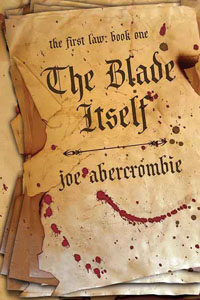
About half a year ago I read The Blade Itself by Joe Abercrombie. And I didn’t like it very much, as Jonas delighted in pointing out to me when I was cursing about the sequel.

So what do I do?

Well, obviously I go straight ahead and put the second book of the First Law trilogy on my Christmas wishlist. That’s like, logical. Right?

Actually it isn’t, but I did it anyway, for the same reason that I’m still reading the spectacularly uninspired works of Kristen Britain  and still toil through the chaotic, pun-infested mess that the Xanth books have turned into.

Why do I do this to myself, you may ask, and the answer is that this is a bit of an extension of my First Rule of Reading: Never Put Down a Book Once You Started It. By which I don’t mean that you need to finish War and Peace in one sitting, but you may not decide on page 266 that you’d rather read Twilight: New Moon. And the same goes for series. Barring extraordinary circumstances I like to finish what I started.

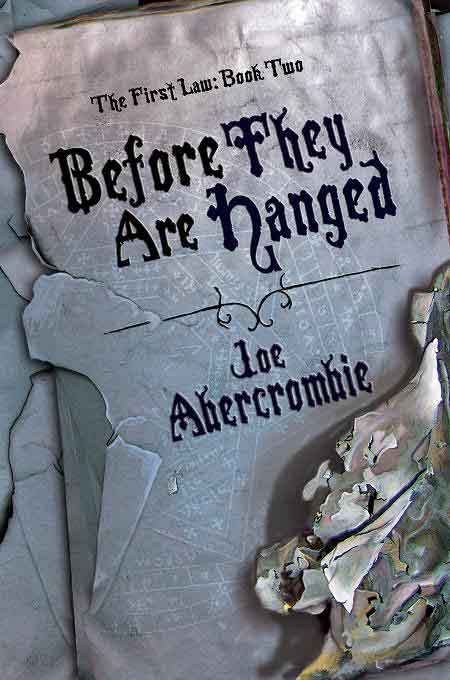
After this brief excursion into a compulsive reader’s convoluted mind, back to Before They Are Hanged. One of my two chief criticisms of the first book in the trilogy was just that: it was the first book in a trilogy. The Blade Itself suffered greatly from being mostly just buildup and character introduction. I am glad to say that the second book of The First Law trilogy actually has something closely resembling a story. Nothing groundbreaking, mind you. The usual shtick of having to find the immensely magical thingamajig that has been hidden away by the Gods/fate/some powerful dude in a white robe to save mankind from the great evil that it bears (see David Eddings and J.R.R. Tolkien for reference), but it’s a story nevertheless. After the first book I’m not going to be picky on that score, trust me.

Unfortunately my second criticism was that all the characters were unlikable bastards. That hasn’t changed so much. Actually not at all, come to think of it. (Although I have to give the Most Unlikable Character EVER Award to someone else this book around. The winner is Ferro Maljinn, for successfully hating everything and their dog. Logically the woman should keel over dead on the first page, because she’s realized that she hates the air in her lungs and is therefore refusing to breathe. Yes, I know, edgy characters are *in*, but there is such a thing as taking it too far.)

*Takes very deep breath*

Where was I? Right. Miserable, whiny, unlikeable sods. One and all of them. Still the book somehow manages to grip you. At least a little. There was a spark of interest in me as I read, ever so slightly outweighing the tidal wave of sarcasm that I had in store for the book. Until the end, that is. Then the sarcasm crashed down on me as book turned more and more absurd.

You see… here’s what happens: At the end of the book each and every single of its myriad point of view characters will say the words “life is pretty good right now, come to think of it”. I’m paraphrasing right now, naturally, and the phrase is delivered with varying degrees of enthusiasm and conviction, but it’s always there. And an average 2.6 pages after the character in question has said this…

(I’m sure you’ve already guessed. Come on, it’s not very hard.)

… a piano falls down from the sky and crushes him into lots of tiny bits.

Now, that’s interesting if it happens to one character. Maybe two or three if there’s a lot of them. But all of them? I can even see what Mr. Abercrombie was trying to say. Life’s a bitch. I might not agree, but I have to give him the right to his own opinion. The thing is that, as a dramaturgical device, it gets old around the third piano or thereabouts.

Summing up: Before They Are Hanged is definitely better than its predecessor. And that’s saying something, because I’ve read far worse than The Blade Itself (also a lot that was better by miles – so much for that argument). In the end the reader is left groaning at far too many far too forced tragic endings, and the only ones that come out smiling are the local piano manufacturers. I’ll reserve my final judgement until I read the last book of The First Law, but so far I’m not really impressed. And I’m still waiting for Ferro Maljinn to kill herself as soon as she realizes that she hates her own guts.

My Year in Books

Here is, for all those interested, a list of the books that I’ve managed to read in 2009. I always enjoy these lists when I see them on other people’s blogs, as they provide me not only with inspiration for my own reading, but also with a rough idea of what that other writer might be interested in. So, here we go (and don’t dream of getting this in chronological order):

The Blade Itself – Joe Abercrombie
I See By My Outfit – Peter S. Beagle
Strange Roads – Peter S. Beagle
We Never Talk About My Brother – Peter S. Beagle
Lythande – Marion Zimmer Bradley
Green Rider – Kristen Britain
First Rider’s Call – Kristen Britain
The Gargoyle – Andrew Davidson
Adventures in Unhistory – Avram Davidson
Pawn Of Prophecy – David Eddings
Queen Of Sorcery – David Eddings
Magician’s Gambit – David Eddings
Castle Of Wizardry – David Eddings
Enchanter’s End Game – David Eddings
Guardians Of The West – David Eddings
Neverwhere – Neil Gaiman
The Glass Key – Dashiell Hammett
The Maltese Falcon – Dashiell Hammett
The Thin Man – Dashiell Hammett
Lustrum – Robert Harris
A Song For Nero – Tom Holt
The Hotel New Hampshire – John Irving
The Lions Of Al-Rassan – Guy Gavriel Kay
Cell – Stephen King
Duma Key – Stephen King
It – Stephen King
Lisey’s Story – Stephen King
On Writing – Stephen King
Die Känguru-Chroniken – Marc-Uwe Kling
The Gunseller – Hugh Laurie
A Game Of Thrones – George R.R. Martin
A Clash Of Kings – George R.R. Martin
A Storm Of Swords – George R.R. Martin
A Feast For Crows – George R.R. Martin
Dragonharper – Anne & Todd McCaffrey
Blood Sucking Fiends – Christopher Moore
Nanny Ogg’s Cookbook – Terry Pratchett
Nation – Terry Pratchett
Unseen Academicals – Terry Pratchett
The Name Of The Wind – Patrick Rothfuss
The Tales Of Beedle The Bard – J.K. Rowling
Indecent Exposure – Tom Sharpe
Riotous Assembly – Tom Sharpe
Wilt – Tom Sharpe
Barnacle Bill The Spacer And Other Stories – Lucius Shepard
Softspoken – Lucius Shepard
The Scalehunter’s Beautiful Daughter – Lucius Shepard
The Writer Got Screwed (But He Didn’t Have To) – Brooke E. Wharton

The Blade Itself

Three days of being miserably sick – three books. The first of which was The Blade Itself by Joe Abercrombie.

The book follows three principal point of view characters, plus a slew of minor characters in the second half. Let’s get the important part out of the way first: None of them are likeable.

There’s Captain Jezal dan Luthar, an egocentric little prick whose only reason for falling in love seems to be that the lady in question is “damn fine looking” – it certainly isn’t her personality, take that from me. There’s Inquisitor Sand Glokta, a cripple who hates everybody and their mum and, judging by his name, seems to be the child of Portuguese and Dutch immigrants (kidding, but: the names in the book enraged me with their wanton inconsistency). And then there’s Logen Ninefingers, the only one of the sorry lot that seems to be even remotely likeable, although he is thick as a brick, which doesn’t go far towards endearing him to me.

Supporting characters include Ferro Maljin, an escaped slave woman whose only goal in life is killing and spitting in the face of every other living being on this planet, including her allies. Major Colleem West, who will trick you into thinking that he’s likeable until you find out that he is just as uncaring and egocentric as his buddy Jezal. And Dogman, who doesn’t seem to have a proper name and enjoys pissing himself…

In short, an endearing lot.

The book isn’t helped by being the first part of a trilogy, the part where everything gets rolling. It consists of long, detailed (I’m not using that as a compliment here) descriptions of how our characters become part of the team and what they have to endure to get to the eventual starting point of their mission. One very brief scene tells us a little bit about the larger picture, but since that scene is (no doubt deliberately) written as a conversation between two high mages that already know everything, it might as well be written in Swahili. The rest is mediocre jokes, unending fight scenes and a love story so horrible that you want to tear your eyes out.

Don’t. Read. Trust me.

A Book A Day Keeps The Doctor Away

Well, sort of. My flu is gone and I managed to get a whole lot of books read while lying on the couch and getting pampered. I can think of worse ways to spend the time. Okay, I could have done without the blinding headaches, but apart from that…

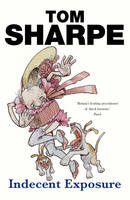
Two of the books I read were Riotous Assembly and Indecent Exposure, both by Tom Sharpe.

Like Wilt, by the same author, I had read both of them a while ago, back in the regrettable time when I still thought that reading translated books was a good idea.

So?

Yeah. Good. Both of them. Although reading the books back to back makes you realize that they have been written fourteen years apart. The author’s style has changed ever so slightly and a few things don’t quite fit. Nothing major, nothing that would ruin the books, but enough to notice. But don’t let that distract you from the fact that together these books represent 700 pages of the finest, wittiest writing to come out of Britain in a long time.

All in all, Tom Sharpe’s books are just outrageously hilarious. Exhumed sex dolls, exploding ostriches, penile injections, elephant guns, old ladies with rubber fetishes. If it’s lewd and strange, it’s in there. And that is a good thing. I have never, ever in my life read books that are more crazy, and I find that I like it.

So get yourself to a bookshop or internet retailer of your choice and buy some Tom Sharpe. You won’t regret it.

P.S.: And you gotta love the dedication:

For all those members of the South African Police Force whose lives are dedicated to the preservation of Western Civilization in Southern Africa

Wilt

A while ago I finished reading Wilt by Tom Sharpe. (Yeah, this review has been in the pipeline for a while, and for no good reason at that. Grrrr.)

My first experiences with the writings of Mr. Sharpe lie about fifteen years in the past, give or take a few. Thus it is understandable that I wasn’t sure if I would like them nowadays. That I had read those books in German doesn’t make my memories of them more trustworthy.

But the memories kept resurfacing. Unfortunately I have read quite a few books in German before switching to English somewhen around my fifteenth birthday, and I am trying to get my hands on original-language versions of all the ones that I liked. I feel I owe it to the books; you wouldn’t believe what incompetent translators have done to some of them. Trust me, it’s not pretty. Anyway, back then I read Wilt as well as Riotous Assembly and Indecent Exposure, and during another, recent attack of Sharpe nostalgia I ordered those books in English.

The other day month, at two in the morning and dead tired, I decided to read one of them. Since I couldn’t be bothered to figure out the reading order for the other two, I decided to start with Wilt. And I almost didn’t put the book down until I finished it.

At first I was a little disappointed. I had remembered the book to be more on the bellyache side of laugh out loud, and sadly this seemed not to be the case, but after sixty or seventy pages that quickly changed. The book takes a while to get going, but when it does, oh man is it funny. (Personally I wouldn’t mind some sort of distilled version of Wilt that only features the conversations between Wilt and Inspector Flint.)

Oh yes, and the scene where the blow-up doll is exhumed. Mustn’t forget that. A scene so epically funny that I dare say I have seldomly read three more entertaining consecutive pages in my life.

So. Wilt is good. And a lot more graphic than the German version. I wonder if the censor-fairy had her part in that. Maybe I just misremember things. (On the other hand, my parents did give me the book when I was fourteen or fifteen. Mhm…) I did wonder whether lesbian sex and rubber dolls might have been shocking in Britain in 1976, but have come to the conclusion that they probably weren’t. It was the 70s after all. And in any case, that’s not what this book is about. It is about a downtrodden community college teacher who finds the one thing in his life that he is certain about. That he drives the staff of the local police station potty in the process is only a pleasant side-effect of that.

There are more Wilt books out there and I think that that makes the world a brighter place somehow. Right now I have other stuff to read. Work stuff, research for my next novel, but after that I can’t wait to read more of Tom Sharpe’s delightful writing.

Lustrum

LustrumI have half a dozen book reviews I still want to write, but I wanted to get this one out of my mind as long as the memory is still fresh.

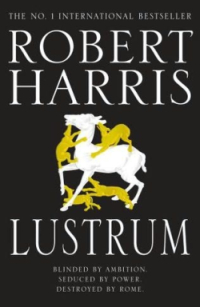
Two days ago I finished reading Lustrum, by Robert Harris. I am saddened to say that the book was good, so this review isn’t bound to be very funny.

Pompeii, Herculaneum, Paestum, Naples, Capri. Places I’ve been to personally, places that I love. They all have one thing in common: almost two thousand years ago they were thriving, buzzing parts of the Roman Empire.

Rome has held its sway over me for about fifteen years now. It started out as a sort of extra-curricular school trip that sounded like fun and has since then bloomed into a deep and long-lasting fascination with all things Roman (ancient Greek will do at a pinch, I’m not picky). I will, one day, write my own epic set in ancient Rome, but until then I’ll have to make do with the works of others on the subject.

In light of this passion of mine  it was only logical for me to read devour Robert Harris’s book Pompeii (okay, I’ll admit it, it was a gift from Jonas, it was he who pointed Mr. Harris’s work out to me first) and after that the first book of his trilogy on the life and works of the famous Roman politician and orator Cicero.

Marcus Tullius Cicero is a fascinating figure. Lauded by his contemporaries and later generations of historians as one of the most versatile minds of his time, he was a lawyer, translator, politician, orator, philosopher and linguist. What makes him even more interesting as a protagonist for a book is the fact that he was a contemporary of all the great names that one will associate with Rome at fist glance: Caesar, Pompey Magnus, Brutus, Lucullus, Crassus and many others.

While the first book, Imperium, chronicles Cicero’s rise to power through hard work and cunning, told through the eyes of his faithful slave (and friend) Tiro, the second book finds him at the height of his career. Newly elected consul, Cicero has to use all his wit to fight against his political enemies and smite down a conspiracy that might well mean the end of the Roman Republic. To say more would unfortunately contain many spoilers, so let it suffice to say that the problems only begin there.

I mention Tiro in the above paragraph, and in that character lies the book’s main weakness. It is a small flaw, one that barely merits pointing out, but I shall still mention it. Tiro, or Marcus Tullius Tiro as he became known after being freed by his master, is a real, historical character. Little is known of his origins, but what is known is that he was (among) the first to ever record a session of the Roman senate in shorthand and that this shorthand system, which was invented by him, gives us many useful words that survive to this day, most notably the ever-popular “etc.” In the book Tiro functions as the narrator, writing down the life history of Marcus Tullius Cicero many years after his death (history tells us that Tiro lived to a ripe age of 99 and died 39 years after his former master). And here lies my principal problem with the book (there is one other one, also connected to Tiro, but I’ll let that slip): our narrator, busily scribbling away at his former master’s biography before he himself croaks of old age, is a bit too intent on pointing out to us that he is writing this many years after the actual events have taken place. A few mentions less of “here my notes record” or “now I myself am old and feeble”, “if only he had known what I know today” etc., would have done the book a great service. Tiro seems to strive above all to destroy our immersion with his constant comments.

Don’t think that the book is bad now, it’s still plenty good. I just was annoyed by Tiro to a certain degree. I also think it gets better as the book progresses.

Back to the book:

Lustrum is, as I already knew, Latin for… well… a whorehouse. What I didn’t know is that is also means “a period of four years”. The book, as you may have guessed, easily accounts for both meanings of the title, and we see a lot more of Cicero than just what happened to him during the twelve months of his consulship.

Although the second part of the book suffers from certain structural issues (which are almost unavoidable since Cicero was, politically speaking, on a decaying orbit after his consulship and is thus demoted from active schemer to passive watcher), the book still manages to go out with  a bang. A bang that left me wishing that Robert Harris would hurry up and write the last part of his Cicero trilogy as quickly as possible.

Lustrum is to a large degree based on the actual historical events and Harris claims that he has taken excerpts from actual speeches by Cicero and his contemporaries as often as possible. I have no reason to doubt him. The book feels authentic and for anyone who shares my passion for Rome and her people it will be a joy to read. I can only recommend the book, but bear in mind that the enjoyment will be all the greater if you also read Imperium, with which Lustrum forms an almost seamless unit.

Not Just About Football

Where to start?

I picked up Unseen Academicals by Terry Pratchett on Thursday evening and couldn’t put it down again until I finished it. That’s a good start. Says something worth knowing about the book, I think. Otherwise? Well…

First of all: The synopsis is a bit on the scrawny side and there is nothing on the back at all, so you’re screwed if you see this book without being able to open it. (There are bookshops in Germany that are cruel enough to wrap their merchandise in cellophane to prevent the customers from opening the books.) Of course, I would buy a Discworld book simply because it is a Discworld book. Kind of a no-brainer for me. But anyway, here we go. (There will be some very minor spoilers, so some of you might want to skip the next paragraph only; the rest of the review will be spoiler free, promise.)

Ponder Stibbons, the man that nowadays more or less runs the UU (only that he doesn’t, not officially), notices a slight problem with the bookkeeping. An old grant, one that pays for well over eighty percent of the food budget (and if you know your wizards you know how important that is), is about to be revoked if the wizards don’t play the game of foot-the-ball, and real soon at that. The cheeseboard is at stake!  So a team needs to be formed and trained and again, if you know your wizards you know that there is no W in Team. Also the patrician doesn’t really like the game, but since when has Archchancellor Ridcully ever been afaid of him? And then there is the mysterious Mr. Nutt. No one quite knows what he is and what to make of him, including himself, but a whole lot of important people seem to think he is very interesting indeed. Also he’s from Uberwald, and nothing harmless ever came out of Uberwald (says Igor). And then there’s micromail and the beautiful Juliet, both more multi-faceted than you would think at first sight. And Glenda, the maker of perfect pies. And Trev Likely, the son of the most famous foot-the-ball player the Disc has ever seen, only he’s promised his poor old mum never to play. And, to quote the book, the most important thing about football, pardon, foot-the-ball, is that it is not just about football. But you can read that much on the jacket of the book, so I’m not telling you anything new. (It’s very true, nevertheless, so keep that in mind.)

This is the first Discworld book that I have read since I (and the world) became aware that Terry Pratchett is suffering from Alzheimer’s. Actually it is the first Discworld book since then, period. I read Nation and enjoyed it a lot. But I was wondering if his disease would affect his writing, or rather his dictating, knowing that due to Alzheimer’s he will have to dictate his books from now on.

Did it affect his writing? Yes and no. The first hundred pages or so of Unseen Academicals are slow. And they feel like listening to a lecture read by an inexperienced lecturer. By that I mean to say that the rhythm of the sentences is somehow off. I can’t put it any better. If you hear a “bad” lecture of this kind, the lecturer will forget to put pauses in his sentences, resulting in blocks of speech that are difficult to parse for the listener. The same can happen to writers. The first draft of more or less everything I write reads like that. In the case of Unseen Academicals it means that often I had to go back and re-read sentences or paragraphs, because they were too long or too convoluted. And I don’t mind fancy writing – that’s not what I mean at all. I read Patricia McKillip, for crying out loud.

But then, right around page 116 (we’re talking Doubleday UK edition here) the book undergoes a stunning transformation. I didn’t like the book’s protagonist, Mr. Nutt, very much up until then. I shall try to keep this as spoiler free as possible, so let me just say that there is some question as to his ancestry, which Pratchett seemingly addresses and resolves early in the book. Only… well, he’s done that kind of thing before. I’m thinking of Angua and of Lobsang Ludd, and I’m sure there are others that I can’t remember right now.

Anyway. The character made me groan in the beginning, but I should have had more trust in Pratchett. That’s what happens if you think that one of your favourite authors is losing his edge. Bad, bad reader. Now go and sit in a corner, and you won’t get any dessert.

What happens on page 116? A speech. You don’t need to know what it is about or who gives it. Just read the book and find out for yourself why it is so heart-stoppingly beautiful that it made me weep. And after that it is all joy and brilliance and great storytelling. I can’t promise that it will be the same experience for you, but this is what I felt.

So, now we’ve been to page 116 and have talked about that. We’re left with 283 pages of book. What are they about? Football. Well, in part, anyway.

I don’t like football. Think it is a stoopid thing to get obsessed about. Don’t play it myself, but can see why it could be fun. Me? I’m too afraid to get the ball smack in my face. As for football fans… well, let’s just say that proximity to the sport, even filtered through a TV set, seems to have an adverse effect on the cognitive powers of the subject. That’s my opinion. Sorry.

Will you not like the book if you hate football? Hardly. Because the book is, in my opinion, not about football. At least not that much. That’s just a setting, a backdrop. What the book is actually about is friendship. And loyalty. And, yes, I’ll admit it, it’s about the feeling of being part of a group, such as fanatic football fans or the Unseen Academicals. And about mircomail. Good stuff that, doesn’t chafe.

It’s also about overcoming our differences, both in terms of belief and in terms of race. And it is extremely touching.

I like the recent Pratchetts. A lot of folks tell me that it’s not the same anymore. They’re darker. And more edgy. And less funny. To the first two arguments I say: So what, live with it. To the last one I say: Are you completely off your rocker, you daft nut?! Early Discworld, I mean the first two or three here, is rather crude. I re-read them recently and I saw that god-awful made-for-TV adaptation of The Light Fantastic and The Colour of Magic and it’s just true. They’re more a joke-overburdened spoof of every fantasy cliché that you can think of than books. It’s good that the first Discworld book I ever read was Mort. Now, the middle books, if you can call them that, are great. I love the witches, and Rincewind and the watch. Mort, Pyramids and Small Gods are still among my favourite books of all time. But the later ones, Hogfather being an early example and then more or less everything after The Truth, display a depth that the old books didn’t have, I think. And I like it, I like it a lot. Unseen Academicals is a perfect example of what I mean. It’s still hilariously funny, but it also deals with a lot of heavy topics. Like, for example, racism and coming to grips with your own ancestry.

I hate books, or movies for that matter, where the hero/the heroine/the people find out that they/their granddad/their elders/the founders are not what they previously seemed to be. It always, without fail, leads to a deep crisis of faith out of which the hero emerges, stronger, better, knowing that although his/her/its life is forever and very fundamentally changed by what he/she/it has learned, they are better people for it. And I think it’s utter crap.

Say you’ve been adopted. And on your eighteenth birthday you find out that your real dad was a famous… pilot. Only you’re scared of heights and want to be a painter. Do you go to pilot school the next day? Do you? Depends on if you’re in a book or in real life, I fear. Well, anyway (wiping froth off my mouth), I was pleased to find that Unseen Academicals approaches the subject with a more healthy attitude. And it is a better book for it.

What else remains to be said? Favourite bits, you say? Well, I suppose I have to mention it, so let’s get it over and done with. My favourite Discworld novel so far is Thief of Time. I absolutely love it. One of the chief reasons for that is the love story. I think Lobsang Ludd and Susan hooking up is one of the best things since sliced bread. And now he’s gone and done it again. That’s all I’ll say, promise. Don’t want to spoil anything. (But man is it cute!)

So, bottom line: Unseen Academicals is a wonderful book. It started out a bit slow for me, but I’m still trying to figure out how much of that is due to my own wretched preconceptions, so it might not necessarily feel the same to others. And the rest of the book makes up more than adequately for any faults, perceived or otherwise, that the begining may have. It’s got everything: Vetinari, Ridcully, Death, lots of pies, Rincewind, football, fashion, love and a possessed whistle. What more can you ask for? Not much. Now go and read the book. (Actually, since you ask: another book featuring Mr. Nutt, if you would be so good, Mr. Pratchett.)