Getting to know me, Part I (books and short stories)

Tell me what you read and I’ll tell you what kind of person you are. Well, maybe not, personally I do not suscribe to this kind of DIY-psychoanalysis, but you are welcome to try. So here is a list of my favourite books and short stories. I would try to put them in the right order, but I’ve read that the sun will in fact go supernova on our collective posteriors at some point so I am not sure if I’d have enough time.

1. The Man Who Painted to Dragon Griaule, Lucius Shepard, 1985

2. The Lord of the Rings, J. R. R. Tolkien, 1954-55

3. The Dark Tower, Stephen King, 1982-2004

4. Discworld, Terry Pratchett, 1983-hopefully a long time in the future.

5. The World According to Garp, John Irving, 1978

6. The Last Unicorn, Peter S. Beagle, 1968

7. I See By My Outfit, Peter S. Beagle, 1965

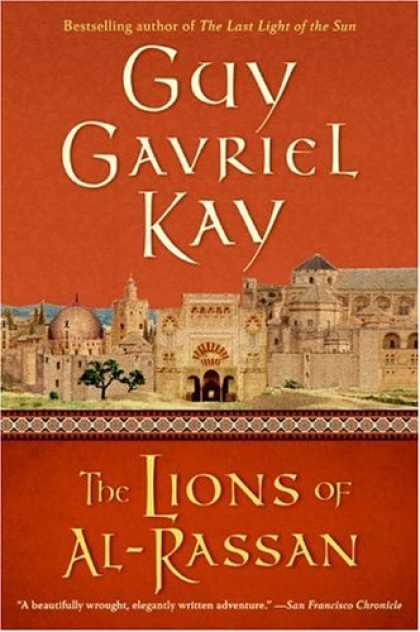
8. The Lions of Al-Rassan, Guy Gavriel Kay, 1995

9. The Alphabet, David Sacks, 2003

10. A Long Way Down, Nick Hornby, 2005

Now here’s an incomprehensive list for you. No Stephen Donaldson. No Steven Erikson. No Jasper Fforde or Tom Holt. No J. K. Rowling and no Patricia McKillip. Gnargh! What about Gaiman, Arthur C. Clarke or Auster? Or (dare I mention them? I guess I should, seeing as they got me hooked on writing back in the early nineties)  Anne McCaffrey, Piers Anthony and Hal Foster. Simply imagine this list to be about 90 mentions longer and we’ll be just fine.

Softspoken

g

My motto for our Dominican Republic experience seems to have been been “a book a day.”  I read five books all in all, and that is counting two bloody thick novels by Stephen King.

Amongst others I read Softspoken, a novella by Lucius Shepard.

Now, I recently had my say about what I think of Mr. Lucius Shepard, and I still hold to it. The man and I will never be on the same page when it comes to literature or movies. But he sure can write.

Softspoken is a ghost story set in the deep South, and the heat, the moisture, and the thick accents seem to drip from the pages. Reading this book in the Dominican Republic helped, I think. The air must be similar.

Sanie Bullard (spellcheck just offered me Dullard as an alternative; not unfitting, I have to admit) has recently moved to South Carolina with her husband, to give him the peace and quiet to study for the bar. They live in his ancestral homestead with his hick brother and overly timid sister. At first Sanie is bored. Slowly a mystery arises, showing a way out of the boredom – and then there is also the handsome Frank Dean, for whom her husband has nothing but contempt. But all too soon feelings like boredom, curiosity and maybe love are swept away by the horrible secret that the old Bullard Mansion holds.

Softspoken may be a bit of a non-story (as Jonas pointed out to me), but I don’t mind that. It may be over before it begins, and I fear the ending is as solid as an elephant statue made from jelly, but what I’ve always loved about Shepard is there. The superb writing. The atmosphere. The beautiful sentences. I enjoyed Softspoken, despite the occasional stab at Stephen King and other popular writers. Oh do I wish Lucius Shepard were less of a snob.

A few notes on the visuals of the book: the cover art, which is terrible, was done by a man named J. K. Potter, a funny name given the author’s dislike of Rowling’s writing. Also, it would have been nice if someone had taken the time to proofread Softspoken. I find it hard to notice typos, both in my own writing as well in works by others. (That’s what Jonas is there for.) I am the anti-proofreader, so to speak, but in Softspoken even I caught plenty of errors. And don’t get me, started on the, punctuation?

The bottom line is that unfortunately Softspoken has more flaws than are good for it, on a writing level as well as in its physical appearance. It is not one of Shepard’s better works. Yet I still liked it. Why?

Mostly because, although I have never been to the South, I still feel that Softspoken captures the feeling of that region, the slowness and the heat, rather well. Shepard just has a knack for setting the mood. You gotta give him that.

First Rider’s Call

A Turd: The Opposite of ExcellenceIs a turd still a turd if you know it will be a turd?
I guess so.

I read Green Rider by Kristen Britain about a year ago and its sequel has been standing in my bookshelf for a while. So far I was afraid to touch it; after all bad writing might prove to be contagious, and I didn’t want to risk it while Express Delivery was still in the works. But now, in the lull between books, I have found myself once again in the mood for something… well… turdy.

First Riders Call picks up about a year after the story of the first book ends. For all intents and purposes it might be ten years or twenty, or even a prequel, seeing as almost all the character relationships are reset to zero. To be easy on the readers that are new to the series, I suspect. Personally, I don’t pick up a book unless I’m certain it is either a standalone or the start of a series. Readers Golden Rule #2.

But not to worry, everything will return to normal after a few hundred pages of headless chicken behaviour by our heroine, Karigan G’ladheon. Pardon, Galadriel. Erm… Galadheon, I mean.

The book’s originality is mind-numbing.

And don’t get me started on the Elves. Elf. Gargh! Elt, I mean. There. Tall, pale, forest dwellers. Shy and elusive. Users of earth magic. Wear pearly white armour and unable to bear the touch of iron. Ring a bell? Yes? Thought so. You’re a clever one, aren’t you?

Unlike our heroine. Karigan Galadriel herself never fails to stun with her razor-sharp powers of reasoning. The silly girl will gladly mistake a sailboat for a chicken if it helps to draw out the plot for another twenty pages. And I pray to God that the never comes up with the idea of setting up a relationship counselling service. That would surely mean the end of the world as we know it. Humanity would cease to reproduce, that is for sure. Miss Britain seems determined to make the inevitable, painful love story last until the final page of the series.  If we find the courage to read it, that is.

Also, and I really need to say this, sorry: if I have to read one more scene, in any book other than the Bible (which I’m highly unlikely to ever read, period) in which a Solomonic judgement is passed off as the next best idea since the invention of the cheesegrater, I’ll go mad. And then I’ll find the author and strangle him, slowly.

Now, any last words? Yes. If you’re in the mood for an easy read, something that will slip by your eyes in a heartbeat – reading light, so to speak, no intellect calories attached – then go ahead. First Rider’s Call is the book for you. If not you might find hitting yourself over the head with a cricket bat to be more pleasant and a better use of your time.

Cell

rgg

My relationship with King started out badly, back when I was fifteen. Already a voracious reader, I was invited to the birthday of a classmate of mine by the name of Christine. Her last name shall remain shrouded in obscurity. Not the brightest cookie in the jar, one might say. And Christine showed me her bookshelf. Twelve books. Every single one by Stephen King. “And I read all of them!” Christine proudly proclaims, as if she has just come up with the square root of pi…

Well, anyway. That was then. I apologize for any bad thoughts that I have had about Mr. King in the years to follow. First impressions can be deceiving. The Dark Tower and It have taught me otherwise in the meantime.

And now Cell. After the long intro I have to admit that Cell doesn’t need a very long review. The novel is above all solid. It has solid characters. King seems to have a knack for those. The plot is solid too, except for the slightly abrupt ending, but I shall refrain from going into detail here. Cell concentrates on the characters, their fears, hopes and needs and still doesn’t fail to be, well, epic. That’s what I call a good book.

And that’s all I need to say.

The Hotel New Hampshire

Another Irving book. I swore not to read any more after Until I Find You. Needless to say that I didn’t like that one very much. I find that some of Irving’s books (not all of them… wait, yes, actually all of them) are just an exercise in collecting weird characters with weird jobs and weird fetishes. It’s okay, if you do it right, after all I loved The World According to Garp, and the people in that one are about as cockoo as you can get, but sometimes it just gets in the way of the story. Like in The Hotel New Hampshire.
Now, to be fair, it is a lot better than Until I Find You, where I had to restrain myself from making a lot of black and white confetti fifty pages in. (I read the whole book in the end, god knows how I managed AND stayed sane. It doesn’t get better. Not. One. Jot.)

The Hotel New Hampshire seems to constantly be balanceing between falling off the edge of a very high cliff with spiky rocks at the bottom, pulled by the weight of cliché accumulated by its characters and staying on top of the ridge, anchored there by Sorrow. (If you read the book you’ll know what I mean. Almost all the beautiful scenes in the book are connected to Sorrow. Sorrow and State-of-Maine.)

And the book actually has many good things about it. Old friends die heroically. Parents seem to regress into children. Dwarfs try to grow. Rapists get raped. Bears transform into humans. And most of all, one of the most prominent sentiments in the book: Sorrow floats.
I’m built close to the water, as we say in Germany, meaning that it is easy to move me to tears, but even I found that the ending of The Hotel New Hampshire was extraordinarily touching.
Now imagine that I found it extraordinairily touching DESPITE all the crap that the reader is made to swallow before that.
Irving loves his wacky characters. And he loves to have a lot of them. In the last two books that I read this almost made me swear off Irving forever.
And in the Hotel? Well, it’s pretty thick. Whores, radicals, communists, radical communists, bombs, opera, circuses, dwarfs, pet-bears, fake-bears, fake orgasms, lesbians and gays, rapists, weight-lifters, stuffed dogs, plane crashes, hostages, day-dreamers, more rape victims than you care to count: You name it, the hotel got it.

It’s just a little too much. It suffocates the story at times. At other times you will just put the book down and ask: why am I doing this to myself?
Me? Well, I’m a bit of a masochist when it comes to books. Finish what you start, is my first commandment. I tend to think that things will get better, just after the next page. Often they don’t. Often I know that. I those cases I at least want to be able to make an informed decision on how bad the book in question is. This lamentable habit has cost me quite a few precious hours over the years. The only book I ever put down I regret having done so, The Stand by Stephen King, but that’s nothing that can’t be remedied.
Anyway, the bottom line is that despite all the sex, and the rape and the general nauseating over-the-top-ness of The Hotel New Hampshire I am very happy that I did not put it down. At least not for long.

Hope floats too, I guess.

The Lions of Al-Rassan

n

First of all: Yes, I know, I am much funnier when I dislike stuff. Everyone is.

And: Yes, I promise to read something crappy next. (Chances are good; I’m currently reading a book by John Irving, who might be a good author if he didn’t obsess about sex that much.)

So: Sorry, but The Lions of Al-Rassan by Guy Gavriel Kay is one of the most excellent novels that I have read in, well, a long time.

Besides that there really is not much to say. The book follows multiple point-of-view characters, each of them real and likeable enough to adopt in a heartbeat. The setting is medieval Spain, or what medieval Spain might have looked like had things gone a little different, but just a little, mind you. The story is powerful, passionate and mesmerizing, something I haven’t experienced to such a degree since… let me think… The Dark Tower, I’d say. Completely different type of storytelling, but both sweep you off your feet.

My husband read Tigana (also by Guy Gavriel Kay) recently and had a similar experience. So yay for Kay. And that must be true, because it rhymes.

(Do not continue reading if you want to keep your respect for me as a professional geek, but) the book also features one hell of a love story. I can’t help it, I’m a girl, don’t hold it against me.

So the bottom line is this: Read this book if you love good fantasy/alternate history with strong characters and really really excellent writting. The Lions of Al-Rassan was really a bit of an eye-opener to me in that respect, seeing that in the past I tended to look down on alternate history stories as the refuge of post-menopause women with boring jobs. My bad.

And what about Barnacle Bill?

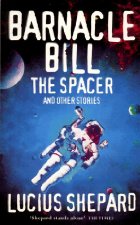
Barnacle Bill the Spacer

Oh, yes.

Sorry.

Got a bit carried away there.

Where was I?

Barnacle Bill.

My Lucius Shepard experience so far has mostly been limited to short stories, and of those I have read a lot. Also, as mentioned above, two of these count among my favourite pieces of writing in the whole wide world. So naturally my expectations for Barnacle Bill were high. I am glad to say that I was not disappointed.

As with a lot of Shepard’s writing, I would not have minded for some of the stories to be longer. That is especially the case when it comes to the title story, where you only get a glimpse of what our world might look like in the future. It’s not pretty, but I’d like so see more.

As for the other stories: both A Little Night Music and Sports in America suffered from a certain blah-ness, but I suspect that is because I found the topics to be to my disliking. The writing is as always superb.

The Sun Spider is Shepard at his best. I don’t think anything will ever be able to eclipse the story about the sleeping dragon Griaule and Meric Cattanay the man who painted him, but this one comes close. Like Lem’s Solaris or the 2007 movie Sunshine by Danny Boyle and Alex Garland, this story manages to convey the sense of awe and wonder that I imagine has to beset one if confronted with something as mind-boggling as the sun or, as in Lem, a creature too alien to comprehend.

We are taken to Egypt in All the Perfumes of Araby and from there on towards Israel. A setting that made me pause, given the current political situation in that region. The story is twenty years old, true, but from my viewpoint not much has changed in that time, so what would Shepard’s take be? Surreal, is the answer. And once again too short. The story seems to end when the protagonist’s journey is just beginning. If you ever read this, Mr. Shepard, personally I wouldn’t mind reading a novel about Danny Shields. Just so you know.

Finally, maybe the most surprising story of the collection: Beast of the Heartland. I didn’t think much of it when I started reading the story. Actually I was sorely tempted to put the book aside at this point, only that’s against my honour as a reader. The problem was that I could once again tell that this was a subject that didn’t draw me much. Now, after reading the story, I am very grateful that I did read on, because this story about a washed-out boxer is amazing. It’s not too long and not too short, sad and joyful at the same time and full of mesmerizing imagery.

All in all Barnacle Bill the Spacer is a thoroughly satisfying read, although I would recommend the more recent Eternity and Other Stories to first-time Lucius Shepard readers. But then again, if you want to get really hooked read The Man Who Painted the Dragon Griaule, now there’s a story…

This was going to be a post about Barnacle Bill the Spacer but then…

… I read up a few things about Lucius Shepard, the author of Barnacle Bill the Spacer and half a dozen other books that I absolutely adore.

I very much adore Lucius Shepard. I adore his writing. I adore the way he describes places and I absoluetly adore his gift for setting the mood. I also adore his political and religious views. I short, Lucius Shepard is God.

At least I thought so before I started reading his blog in order to get a few nice juicy quotes for this post. Up until a few days ago, I didn’t even know Mr. Shepard had a blog. I had read that he was a very seclusive person and didn’t like to give interviews. Somewhere. Wikipedia, I think. And that was it. Man has no public life. Good for him. I tend to support life-style choices like this.

But then I re-read the Wikipedia entry and lo and behold! There seemed to be a blog after all.

Only it turns out that the political and religious views and the great writing (also suspiciously absent in the blog) come in a package deal with a stunning example of the most horrid artistic snobbery that I have ever witnessed in a human being.

This man claims to be a Firefly addict, yet he says that according to his own likes and dislikes he should hate the show. Actually, he hates “populists like Joss Whedon and J. K. Rowling.” I won’t even get into on how many levels that is so  wrong. (Not a Whedon fan-girl myself by any means, but he has done some good stuff over the years, above all Firefly.) Could it be, Mr. Shepard, that you try to dislike everything new and presumably Hollywood with a Harold-Bloomesque fervor, but actually, deep down, like stuff like that? Did you, like many people of your generation, sit through Star Wars Episodes 1-3, desperately grabbing on to your deep-seated mistrust, lest it fly away on wings of superb CGI? And did you shelter your carefully-groomed hatred, lest it get scared away by the good story? If yes, then I pity you. There seem to be too many people out there today that reject modern cinema out of principle. Like my grandfather, who still insists that in his youth the vegetables still tasted of vegetable and not of cardboard. Only he is probably right.

Also, there is the small matter of JCVD, which as I can personally testify is the worst movie of the decade. And I’ve seen Bloom. (Not Harold.)

Sorry, Mr. Shepard, but it’s true.

Now, the question is: Can I still adore an author who is also so obviously a total idiot?

I guess I can. The Man Who Painted the Dragon Griaule and Jailwise are still two of the very best short stories that I have ever read. Nothing will change that. Fine writing is fine writing.  Shame about the rest though…

Lythande

Lythande

I recently finished reading the short story collection Lythande by Marion Zimmer Bradley. In my youth, back in the days when I was still reading books in German, I read quite a bit of MZB. Not only did I read Lythande, which I greatly enjoyed,  I also read the Trillium series and the beginning of the Darkover series (both of which I enjoyed greatly initially, and not so much as the series progressed).

One thing that I always stayed away from and swore only to touch with a very long stick is The Mists of Avalon. Not the book’s fault, necessarily, I just react that way if a lot of people tell me that I MUST READ THIS, IT IS SO GREAT. Strange but true. That has changed a bit in recent years, so I might just give it a try one day.

To return to the subject at hand: What all these books have in common is that I read them in German and at the tender age of maybe thirteen or fourteen, and I was interested to see how well Lythande would hold up, fifteen-odd years later.

The answer is: hard to say.

Lythande is what I would call old-school fantasy. When I told Jonas about my self-invented category he said that what I meant is pulp magazine fantasy, and I guess he is right.

I cannot find it in me to really bash Lythande, which is not an euphemistic way of saying that it is crap, it’s just … well, it’s hard to explain.

Marion Zimmer Bradley herself certainly seems to have similar difficulties with her heroine. Each of the stories comes with an introduction by the author and while she openly condemns some of her contemporaries for their strong feminist* views I can not help but think that Lythande is a bit on the feminist side herself. Sometimes. Sometimes not. Mhm.  Also I was surprised to learn that the adept of the blue star started her journey as a man. Or maybe a metrosexual, only that word didn’t exist back then. The first metrosexual then. Now, being a writer myself I know that characters sometimes take on a life of their own and surprise their makers with what they like and what they dislike, but I’d like to say that none of my characters ever underwent a sex change in the process of writing. But let’s not hold this against her too much, she noticed early enough.

As for the individual stories, I find them to be of varying quality.

The first one, The Secret of the Blue Star, is solid enough, even though some of the dialogue is a bit heavy-handed. Something that I sadly associate to a certain degree with books from this period. The biggest drawback, if you can call it that, is that this is the only story to feature Lythande’s friend Myrtis. I would have loved to hear more of the relationship between these two unalike women.

Next up is the star of the show: The Incompetent Magician, which I wholeheartedly recommend, if only for its stuttering title character . Ca-ca-carrying on.

From the heights of hilarity we plunge into a valley of… how to phrase this delicately? Shoddy writing? I guess. Lythande, our heroine, a woman sworn by oath to never reveal her true sex, is tasked by a dying priestess to deliver a sword to her shrine. The catch: only women may enter the temple. Lythande’s reaction: red rage throughout most of the story. I am oversimplifying the plot immensly here, and there are some mitigating factors to be considered, but I found this to be the low point of the book. The story gets redeemed in the punchline, but I doubt that brief moment of satisfaction is worth all that pain.

Sea Wrack is another gem in this collection, for it manages, more than any other story in the book, to show us the true depth of Lythande’s loneliness and the burden of her vows. Also it has a mermaid in it.

The last of the stories by MZB is called Wandering Lute and it is both solidly written and has a very funny ending. I approve.

Which is more than can be said of the last story in the book, Looking for Satan by Vonda N. McIntyre. I’ll try to be nice. Let’s see if I manage. Yes, I see that the title is cool, which is probably exactly what Mrs. McIntyre thought when she came up with it. Unfortunately Looking for Satan is also a story about three women and one man who have sex a lot, who are too stupid to live and who walk through the book’s fantasy world with an illuminated page from the Bible, looking for their red-furred, winged friend Satan who is called that because his mum liked the picture. Yes. You have to read it to believe it. On second thought: don’t.

Summing up: I don’t know if I should recommend Lythande. It seems a bit too old-school for my taste. The dialogue tends to be stiff and the protagonist’s emotional journey gets a rather erratic treatment. But then there are the good moments, like Lythande’s encouter with the mermaid and Rastafyre the Incomparable. Maybe I should just recommend my approach to picking a book:

Go to a bookstore, a big one, one that has a lot of books (which is a good thing for bookstores to have, in general). Go to the fantasy section and look for Marion Zimmer Bradley. Now, take Lythande out of the bookshelf in front of you. Read the first page, but only the first. Do not look at the summary, not if you can avoid it, and certainly not in this case. Now, close the book and ask yourself if you liked what you read. Yes? Very nice, proceed to the checkout, go home and enjoy. No? Well, don’t worry, just rinse and repeat until you find something that is nice. It’s very bad manners to walk out of a bookstore without buying something.

* Don’t misunderstand me. I am not against women’s rights. More precisely, I am for equality between people. Feminism seems like a well-intentioned movement gone terribly haywire.